What's in my IFAK
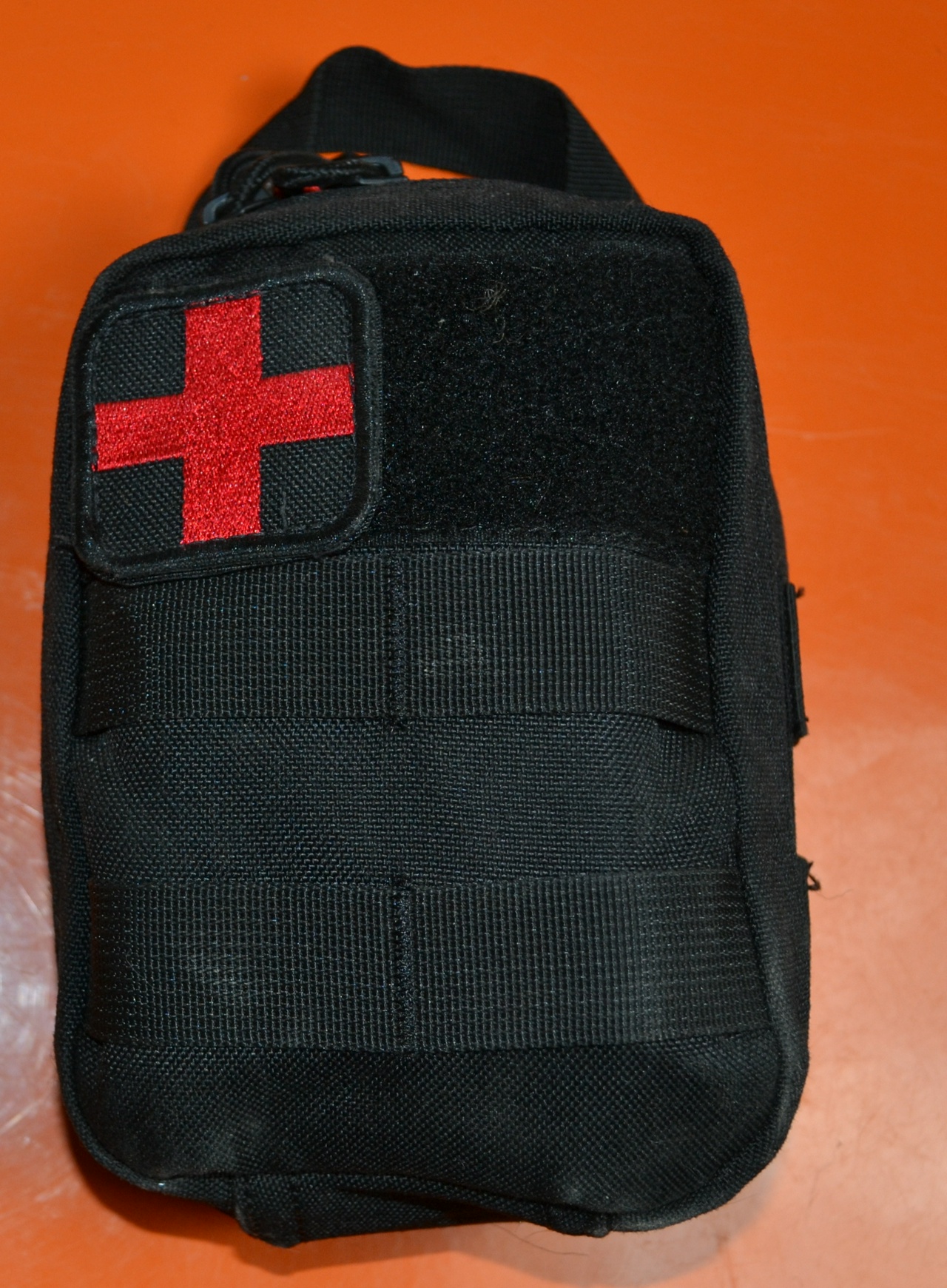 This small pouch is one of my IFAKs. It lives on the outside of my backpack, held in place with velcro.
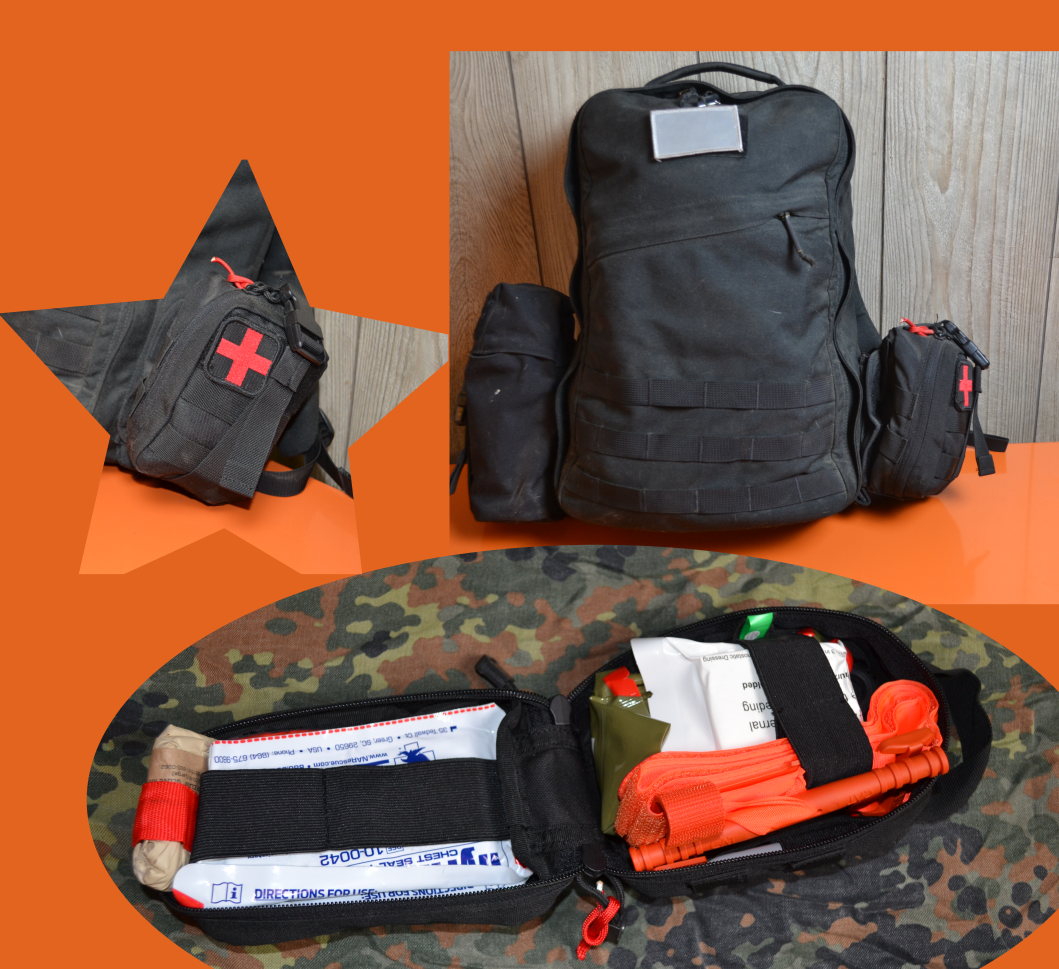
IFAK?
So what is it? An “individual first-aid kit” (IFAK) is a small, dedicated trauma kit meant to be rapidly available to provide life-saving medicine to its wearer. As far as I know, the concept comes from the military, and most IFAKs are built around the types of fatal wounds that soldiers in combat are likely to encounter. However, an IFAK can be focused on any specific type of threat. For example, an IFAK can be designed to deal with possible chainsaw injuries.
What it isn't
Despite the name, an IFAK will generally not contain many general-purpose first aid tools. Instead, it is laser-focused on a small set of life-threatening injuries.
My typical first-aid kits include many items that are usually not in an IFAK, such as:
- Adhesive bandages
- Wound cleaning items (such as an irrigation syringe)
- Wound closure devices
- Tape
- Medicines such as pain killer tablets, digestive aid, and antihistamines
- Materials for splinting or immobilizing a fracture
...and many other things
My Background I am not a medical professional. I've taken a small amount of wilderness first-aid training, but I am not a medical expert or professional. The purpose of this article is to outline my current setup, not to tell anyone else what they should use. I am not qualified for that.
Contents
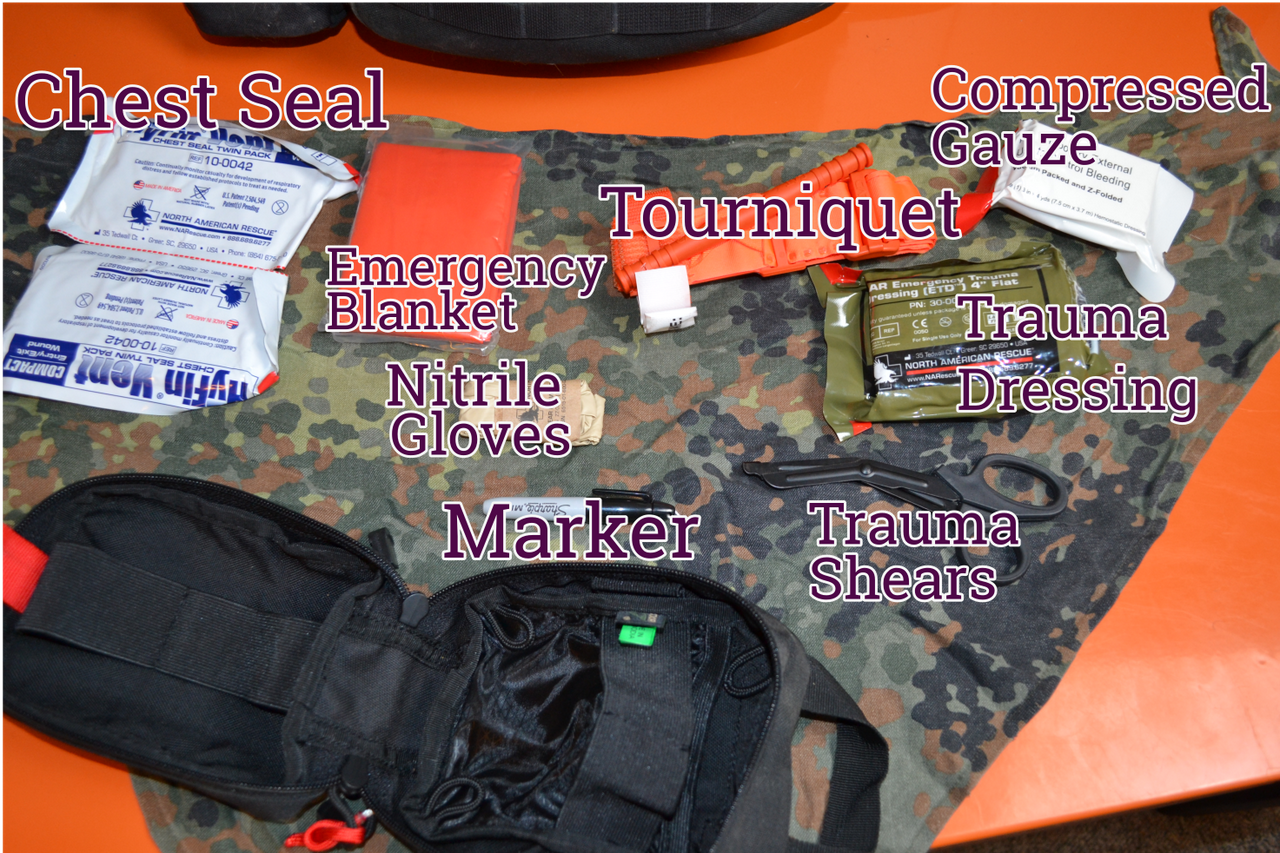 My kit contains the following items, constrained by my (lack of) skills; my budget; the availability of certain medical supplies; and the limited size of my pouch.
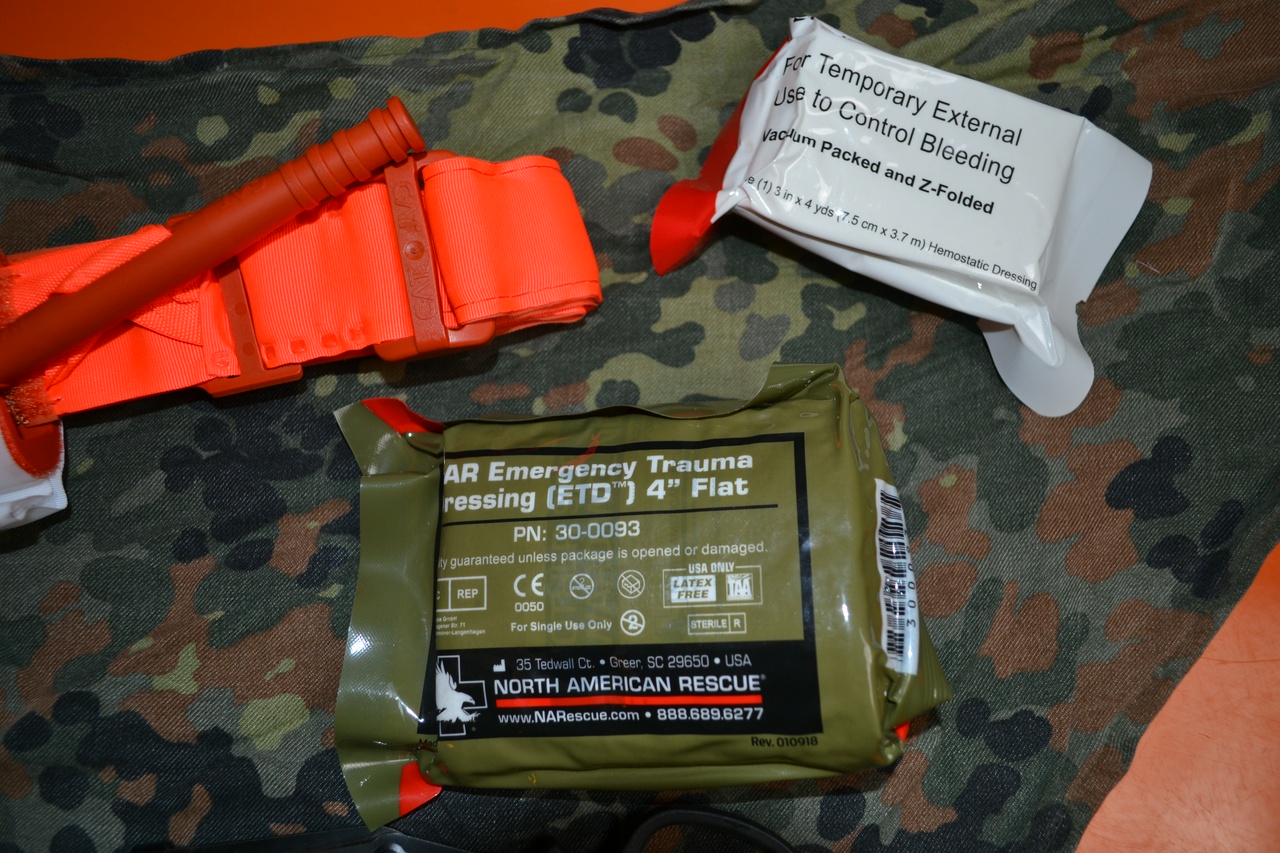
Tourniquet (and Sharpie)
Always applied directly to skin (never on top of clothing), tourniquets are used to stop arterial bleeds on arms and legs. They must be applied very quickly, so make sure to learn (and practice) how to properly stage and apply these things. Practice using them one-handed too.
Note: Make sure to obtain these from a reputable supplier. There have been documented instances of poorly-manufactured tourniquets on the market, which may fail upon use.
Folded Compressed Gauze
A large amount of clean gauze in a small space. Primarily used to pack a deep wound to control bleeding.
Emergency Trauma Dressing
This is a long stretchy bandage that sticks to itself. Can be used alone or along with gauze in order to pack a deep wound.
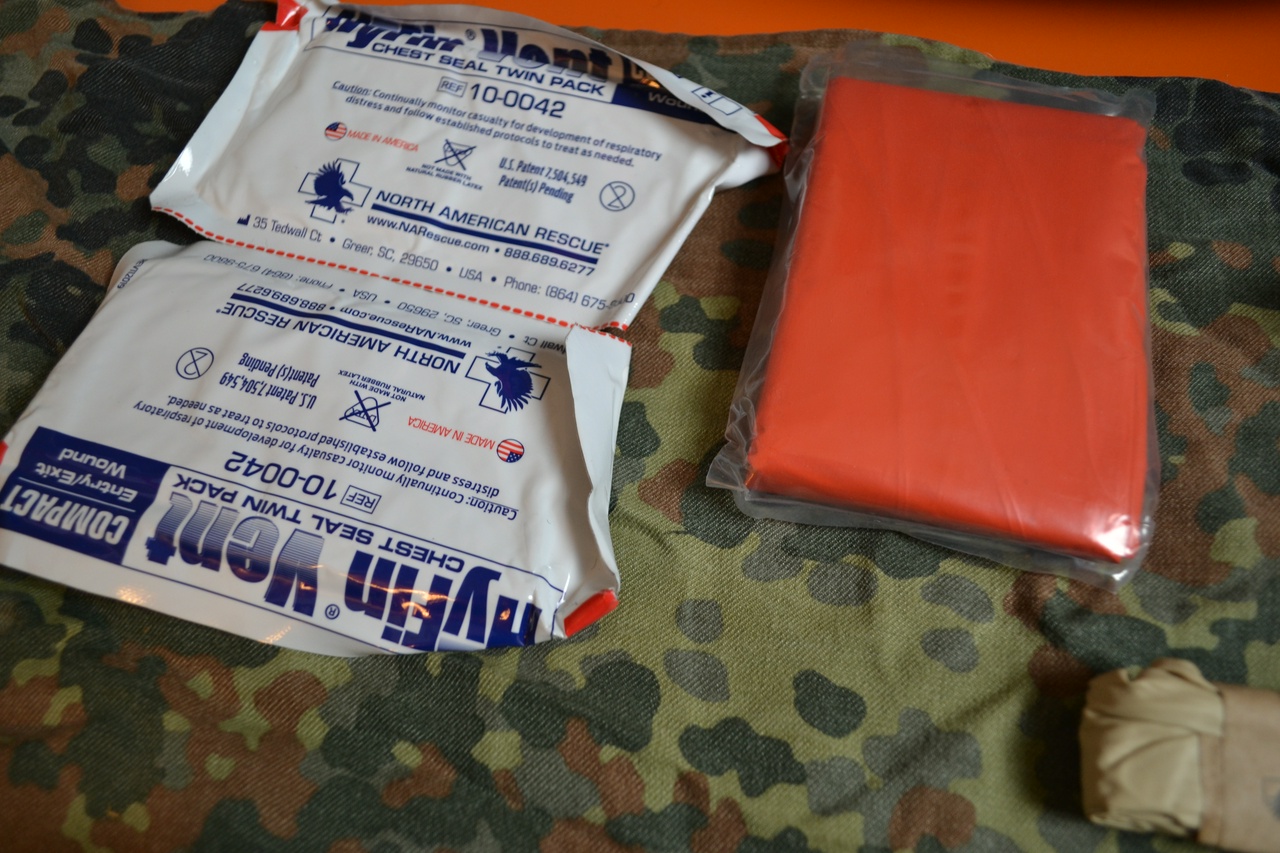
A Pair of Chest Seals
These are designed to prevent air from flowing into one's chest cavity. They must be applied directly to dry skin. They come in pairs because they may need to be applied to both an entry and an exit wound.
Emergency Blanket
Also called a 'space blanket' or a 'survival blanket', this very thin lightweight blanket is primarily intended for use in hypothermia situations, it can also be used to treat shock.
Non-Latex Gloves and Trauma Shears
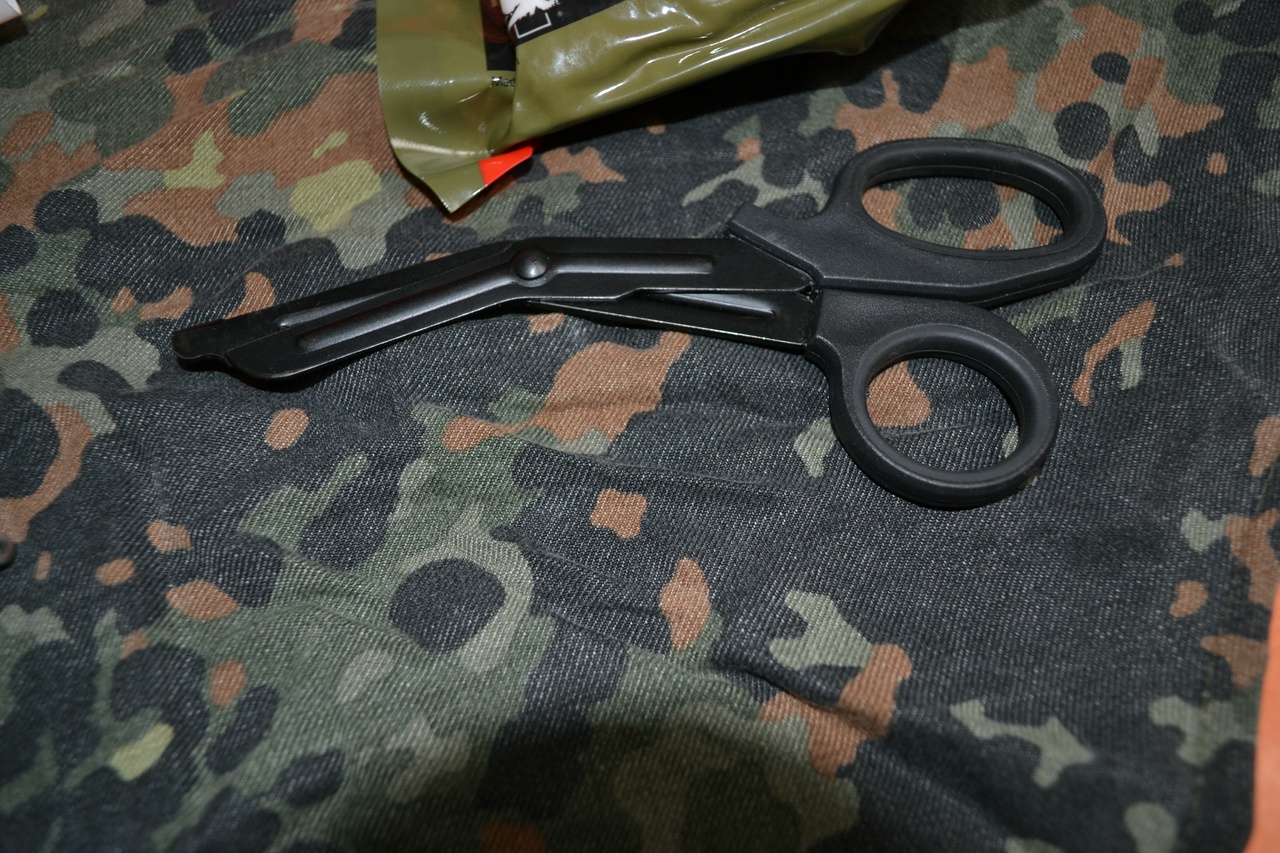 Necessary protection is important in many medical emergencies. Also, the ability to quickly remove clothing is critical for many treatments, quality trauma shears make that possible.
Probable Additions
My current kit does not currently contain these items, but I think they could all make very valuable additions at some point.
- Forceps – Very useful for removing debris from a wound.
- Eye Shield – Used to protect a damaged eye.
- Electric Light – Injuries do not always occur in well-list situations, so having a quality light available can be critical.
- Hemostatic Agent – This material has been proven to speed clotting in major wounds. It's available in a powder form, or embedded into gauze.
- Irrigation Syringe – I find these incredibly useful for cleaning wounds in situations where running water isn't available.
- Nasopharyngeal Airway Kit/ Needle Decompression Kit – Very useful lifesaving tools which I haven't yet been trained to use, but hopefully someone around can use them on me if needed.
A note on cost
I have often found the cost of these items to be surprisingly high; it's not difficult to spend more than $100 USD on a kit. Buying individual items can be less expensive than pre-made kits, and they can sometimes be found on sale (but be aware: many of these items also have expiration dates!).