Choosing an AR-15
Welcome to my quick and informal guide which outlines some of the important aspects to consider when choosing an AR-style firearm. This is meant to be a starting point for beginners. Many details are omitted and very few recommendations are made.
Table of contents
Types of AR platform firearms
The most common AR pattern rifles will be chambered for the .223 Remington round (more in the cartridge section below), this is the standard “AR-15”.
Larger ARs also exist, these are often called “AR-308” or “AR-10” and their parts are not always interchangeable with AR-15s.
If constructed with a pistol brace rather than a traditional stock, an AR-style firearm may legally be considered a “pistol”, which allows for a barrel length shorter than 16 inches, without being classified as a short-barrelled rifle (SBR), which are specially regulated in the united states.
Budget
I think a low-end—but functional and accurate—.223 AR can be built for a minimum price of around $500-$600, (for example, something from PSA). An AR-308 will generally cost more, maybe $900-$1100.
A “nice”, but not super fancy AR build will typically land around $1000-$2000. The most expensive builds can cost upwards of $3000-$4000.
For the extra money, one can expect higher-quality parts and more comfortable controls; but be careful—higher cost does not always mean higher quality.
A cheap, but quality, optic can be found new for as low as $200-$300. Very high-end optics cost as much as a car. Factory-built rifles will generally cost more than home-built, but not by a huge amount (for example, the M&P 15 Sport).
Cartridge
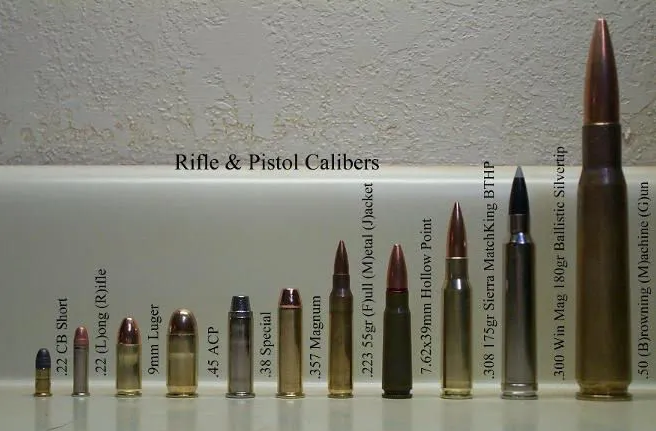 A firearm's performance is defined by the cartridge it was built around. The most important decision to make.
The AR platform can be found in a wide variety of cartridges. This article will only mention a few. They can be split into three categories:
- Pistol caliber
- Intermediate caliber
- Full power
Pistol caliber cartridges
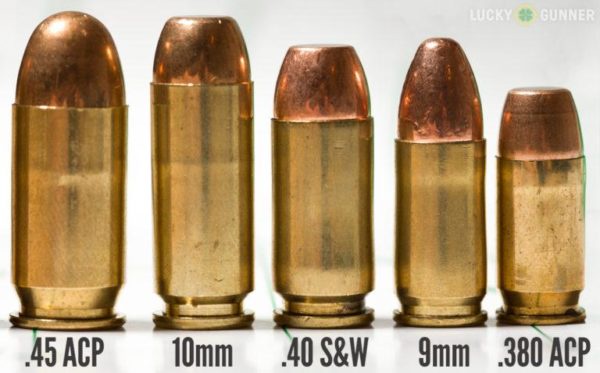
Usually these will be heavy (120-200+ grains) bullets traveling at slower velocities (900-1200 feet/second). Rounds such as .9mm, .45 cal
- Least powerful, but still deadly against unarmored targets
- Effective below ~200 meters
- Somewhat quieter than rifle; Subsonic rounds can be effectively suppressed)
- Light weight
- Pistol-caliber ARs are generally (but not always) based on a direct-blowback action, which can result in surprisingly high recoil
Intermediate rifle cartridges
Light bullets (55-90 grain) generally traveling at high velocities (2500-3200 feet/second) .223, 5.56mm, 7.62x39mm and so on
- More powerful than pistol caliber
- Effective against light body armor
- Effective range up to 500 meters
- High velocity (.223/5.56mm) = flatter shooting
- (.22 cal) poor barrier penetration, including light brush
- Very loud (especially from a short barrel)
- Low recoil
- Light weight (including ammo)
Full power rifle cartridges
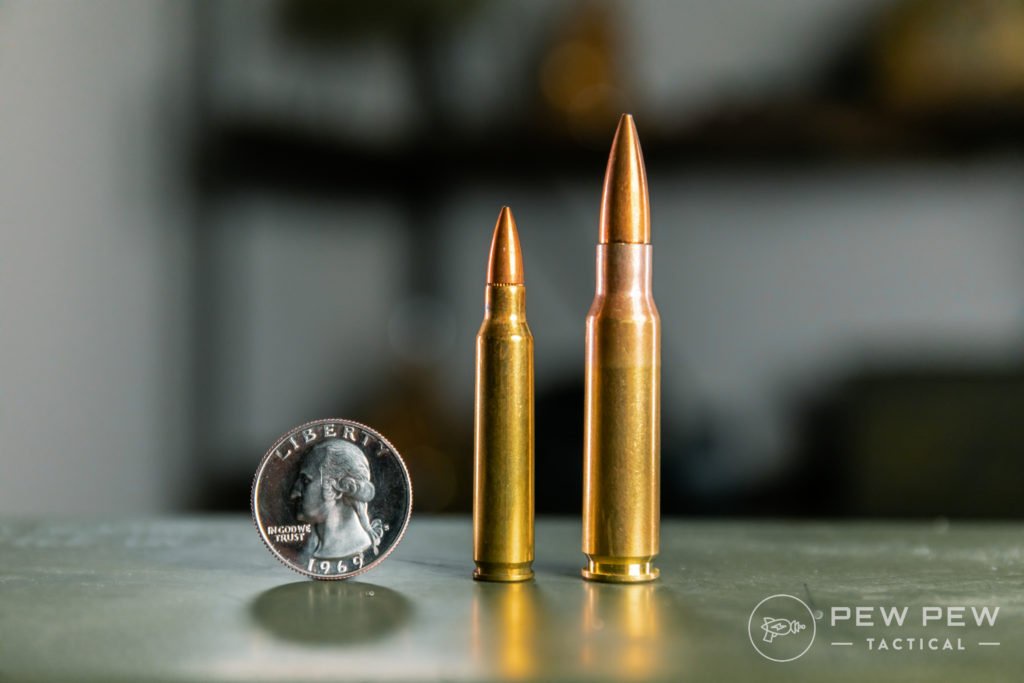 Classic rifle rounds, very powerful. Heavy bullets (130-200 grain) moving fast (>2500 feet/second).
.308, 7.62x51mm, 6.5 Creedmoor
Classic rifle rounds, very powerful. Heavy bullets (130-200 grain) moving fast (>2500 feet/second).
.308, 7.62x51mm, 6.5 Creedmoor
- Substantial recoil
- Heavier (including ammo)
- Effective range up to (and beyond) 1,000 meters
- More expensive
- Very loud
- Short barrel causes significant power loss (and increased noise)
Note on ammo availability: the “NATO calibers” such as 5.56mm, 7.62x51mm, and 9x19mm are some of the most widely available rounds in so-called north america.
Barrel
No single component has a bigger impact on your rifle's performance than its barrel. Often the most expensive single component, due to the precise metallurgy and machining required.
Note: There are important legal implications related to constructing a firearm with a barrel less than 16” inches, make yourself aware of them before doing so.
18-20 inch barrel
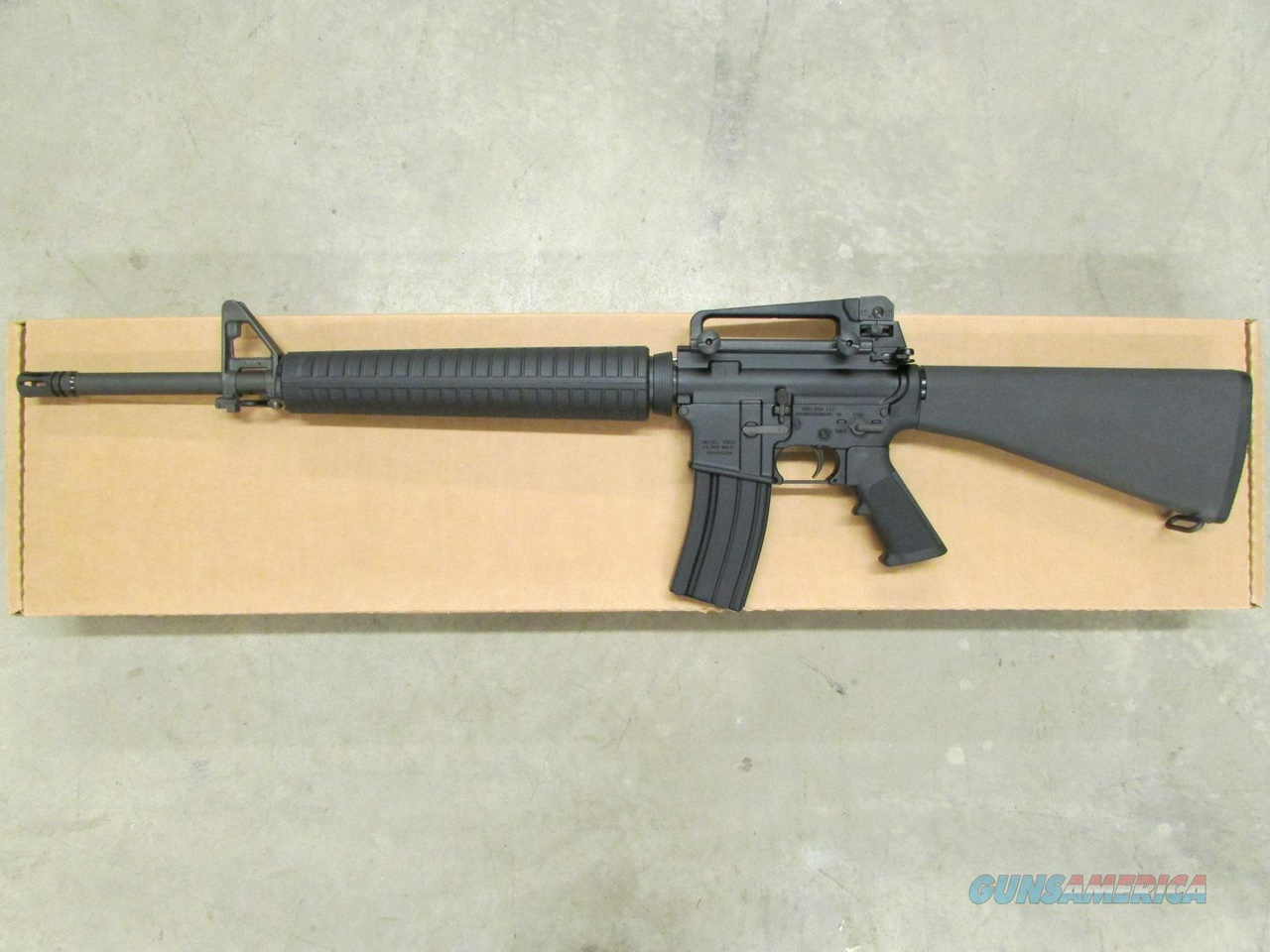 A longer, “rifle length” barrel (up to 24” for rounds like 6.5 Creedmoor) will yield the highest possible muzzle velocity from most cartridges.
Carbine length barrel
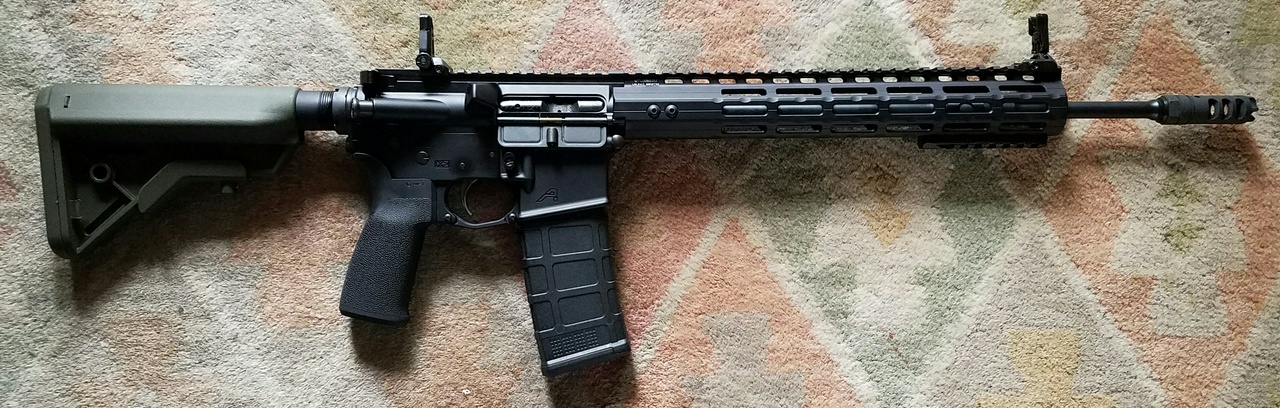 a 14.5-16 inch barrel performs well, while reducing weight and increasing maneuverability compared to a longer one.
SBR (Short-barrelled rifle) length
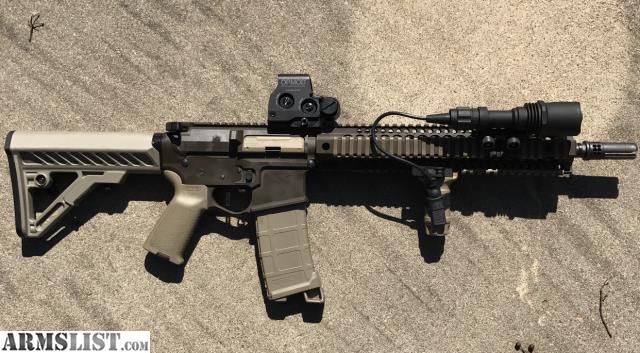 AR barrels can easily be found in lengths as short as 7 inches. These compact rifles are easier to handle, even with the extra length of a suppressor. Some cartridges (such as 7.62x51) will lose most of their velocity, and the firearm may produce a vastly increased muzzle blast.
Thicker barrels will be heavier, but they will maintain accuracy better when heated by sustained fire. Barrels may be chrome-lined, which increases durability.
AR barrels will generally have some type of muzzle device attached. This device will protect the barrel crown and provide some additional function. A flash hider is very common and it will reduce the visible flash as you fire. Muzzle brakes are also common, they will reduce some of the weapon's recoil and muzzle rise by using the force of expelled gas. Muzzle brakes will also increase the muzzle blast experienced by the shooter and others in the area.
Sighting system
Scope
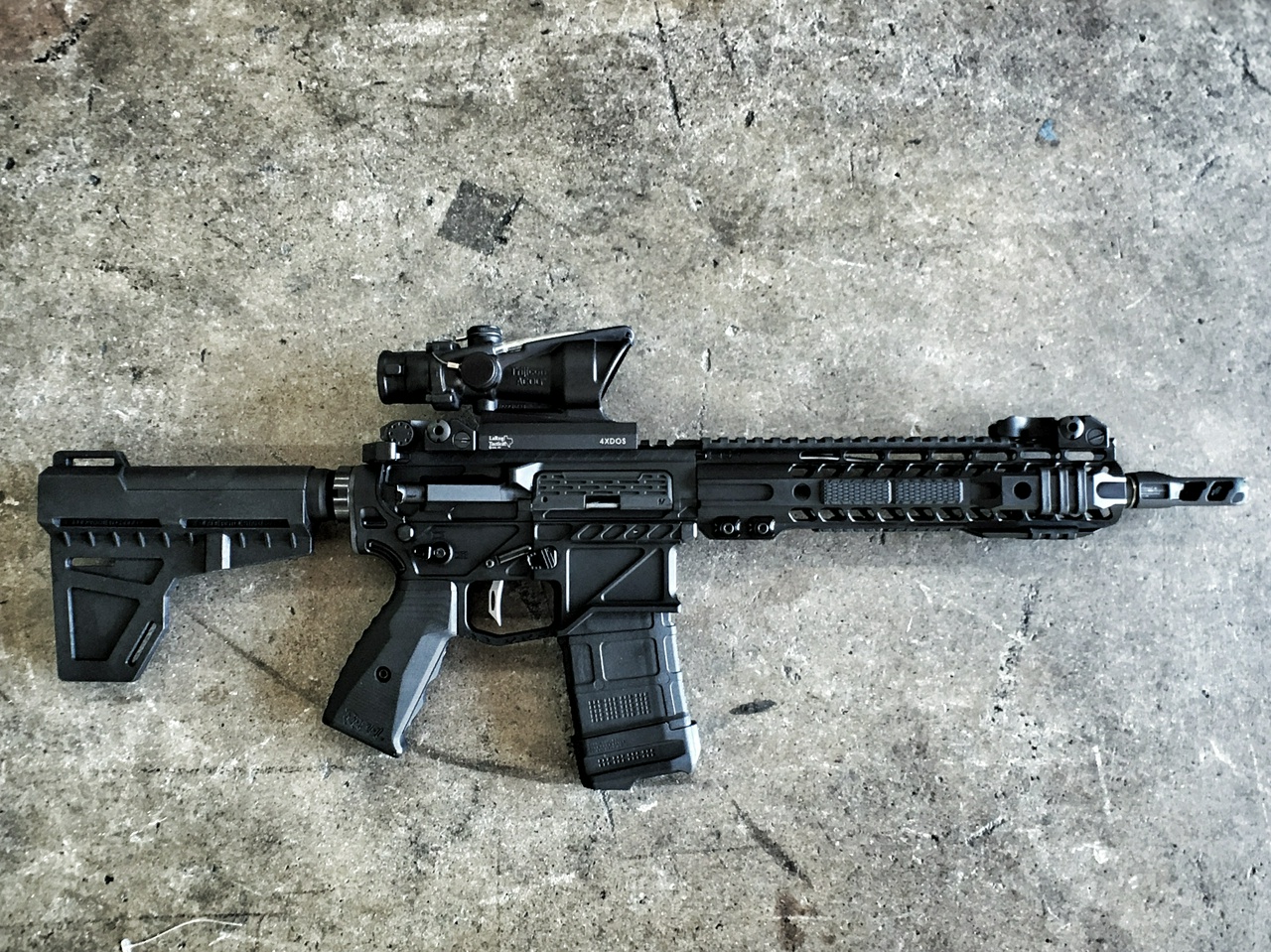 Magnified scopes can help identify targets at a larger range, but they won't necessarily improve your accuracy. They also require your eye to be in a specific location, which can be difficult or impossible from some firing positions.
The options and choices involved in selecting a scope are vast, and beyond the scope of this guide. It is not uncommon for an optic to cost much more than the rifle it sits upon.
Red Dot
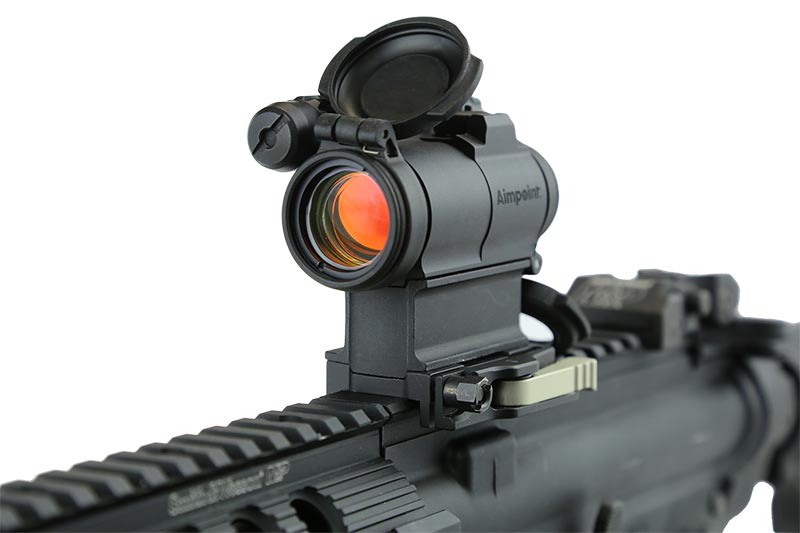 These sights do not offer any magnification, so they work well even from awkward positions. Very easy to see in low-light situations. Usually very light.
Iron sights
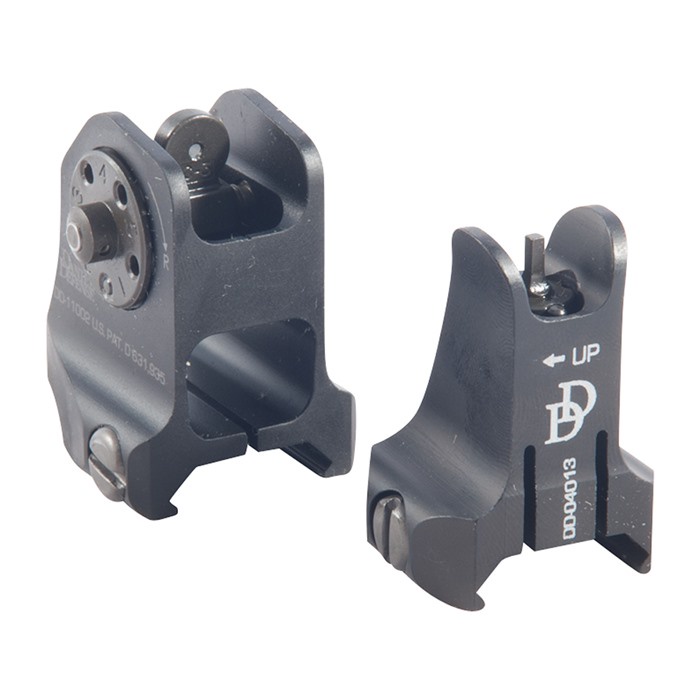 This type of sight has no batteries that will eventually die. Peep-sight style has been proven to be effective. They're usually precision adjustable. Can be rugged and durable. Quality metal ones might be more expensive than you expect, but still less than electronic or glass options
There are many other options here (including popular holographic and prism sights), but they're beyond the scope of this document.
A note on back-up sights
Depending on your use-case, it might be valuable to have a secondary sighting system installed. Maybe for close-range use, or in case the primary optic is rendered inoperable.
Controls
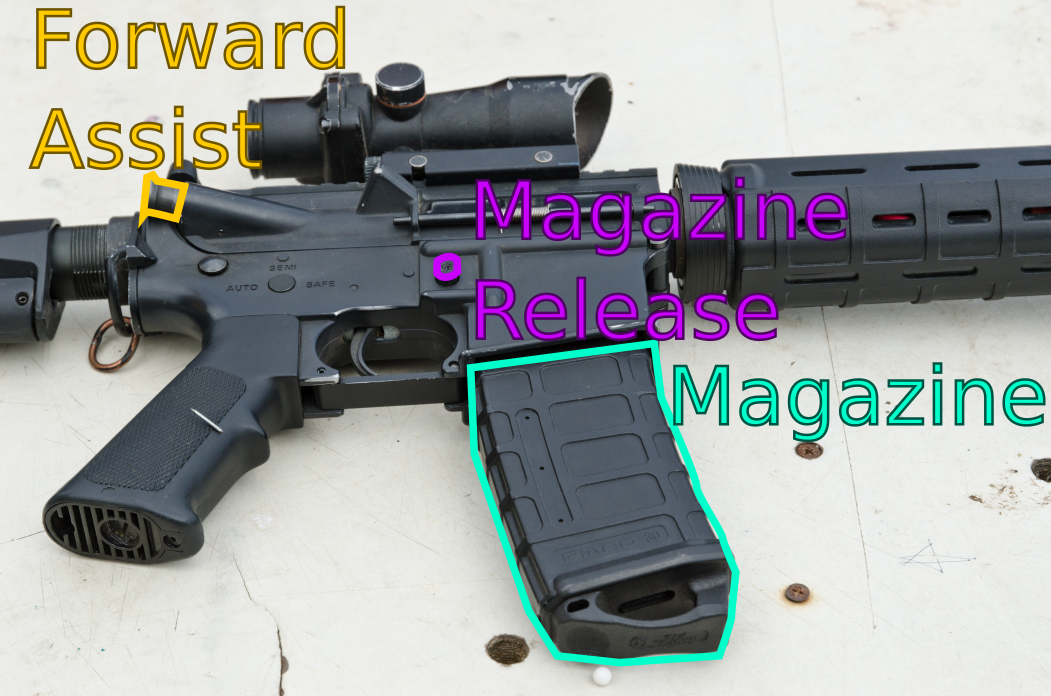
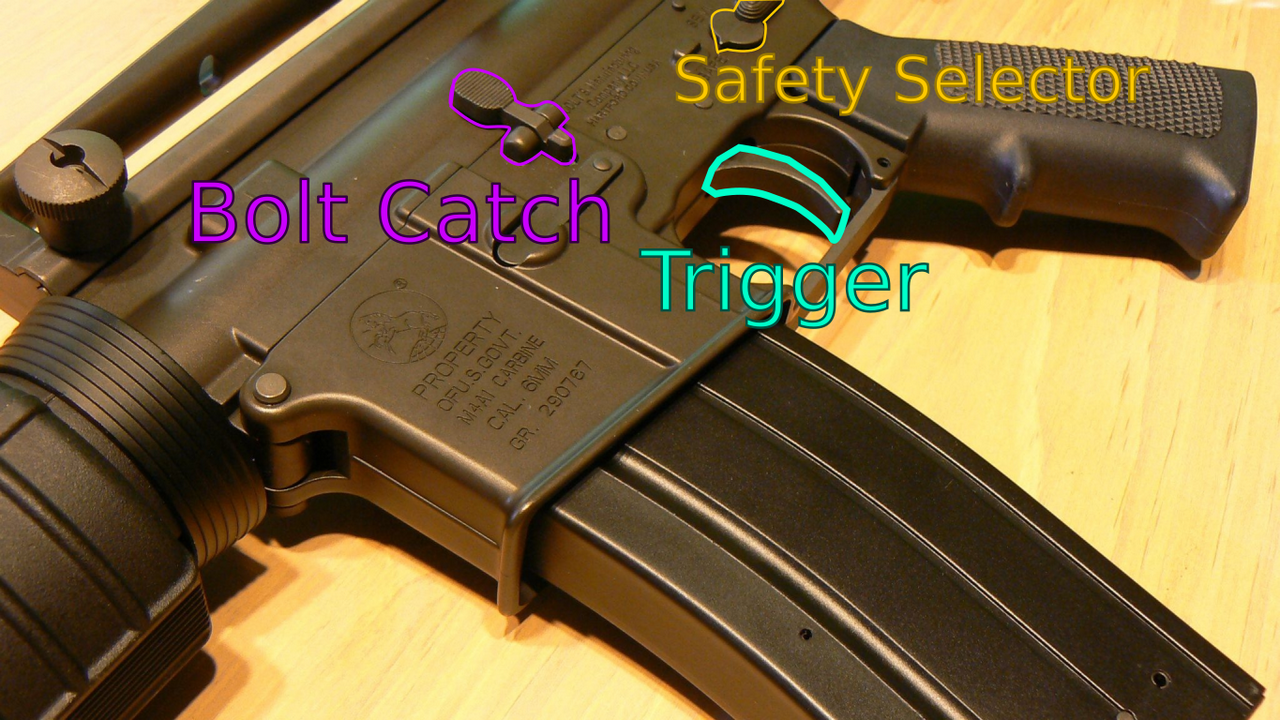 Trigger, safety selector, magazine release, bolt catch, charging handle
There are infinite options here (color, throw angle, texture, size, length/shape, ...), but it's mostly down to personal preference. Everything can be made ambidextrous (at a cost), but some systems work better than others (and some require permanent modifications to the receiver).
Triggers in particular offer many, many options. The most basic option is called “Mil Spec” and is usable, but heavy. There are many higher-end triggers available, they can be very expensive.
Caveat: Forward assists can't be ambi, but many people (myself included) would argue that you rifle is better off without an FA anyway.
Furniture
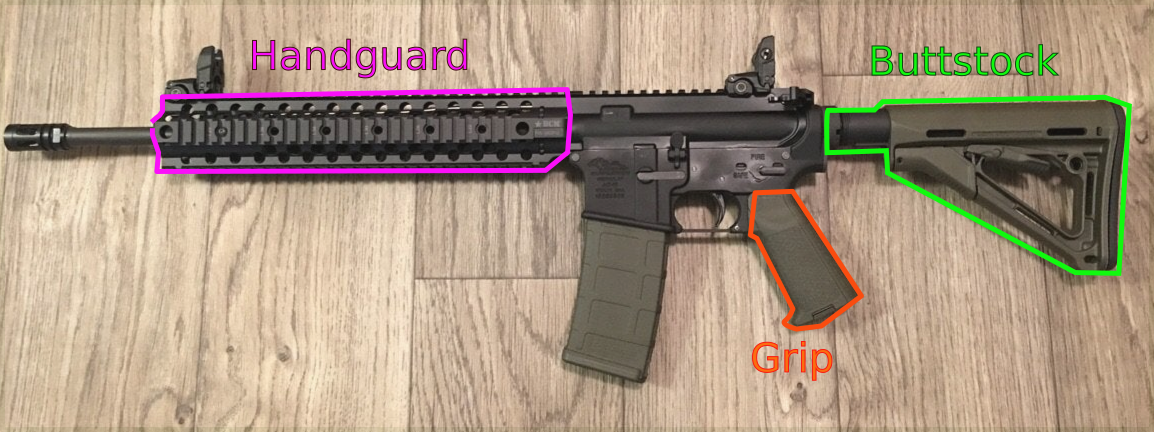 Handguard, Grip, Butt stock, Foregrip/handstop
These items have a large impact on the weight of your finished firearm, as well as its ergonomics. Handguard mounting systems have generally standardized on M-LOK, but you may also see Picatinny or KeyMod around. Materials also vary: handguards are often aluminum, but they can be carbon or even steel. Grips come in many different sizes, multiple angles, some have internal storage, and some trigger guards can flip out of the way to accommodate gloves. Butt stocks can be adjustable or fixed, small or large, some have adjustable comb height. Foregrips are completely optional (except when building a pistol, where they are forbidden), and can be just about any size you want.
Handguard, Grip, Butt stock, Foregrip/handstop
These items have a large impact on the weight of your finished firearm, as well as its ergonomics. Handguard mounting systems have generally standardized on M-LOK, but you may also see Picatinny or KeyMod around. Materials also vary: handguards are often aluminum, but they can be carbon or even steel. Grips come in many different sizes, multiple angles, some have internal storage, and some trigger guards can flip out of the way to accommodate gloves. Butt stocks can be adjustable or fixed, small or large, some have adjustable comb height. Foregrips are completely optional (except when building a pistol, where they are forbidden), and can be just about any size you want.
Other parts
Magazines, parts kits, buffer, Bolt-Carrier Group (BCG) These parts are generally not interesting. As with anything, price and quality will vary. P-Mags are pretty much the standard magazine.
Accessories
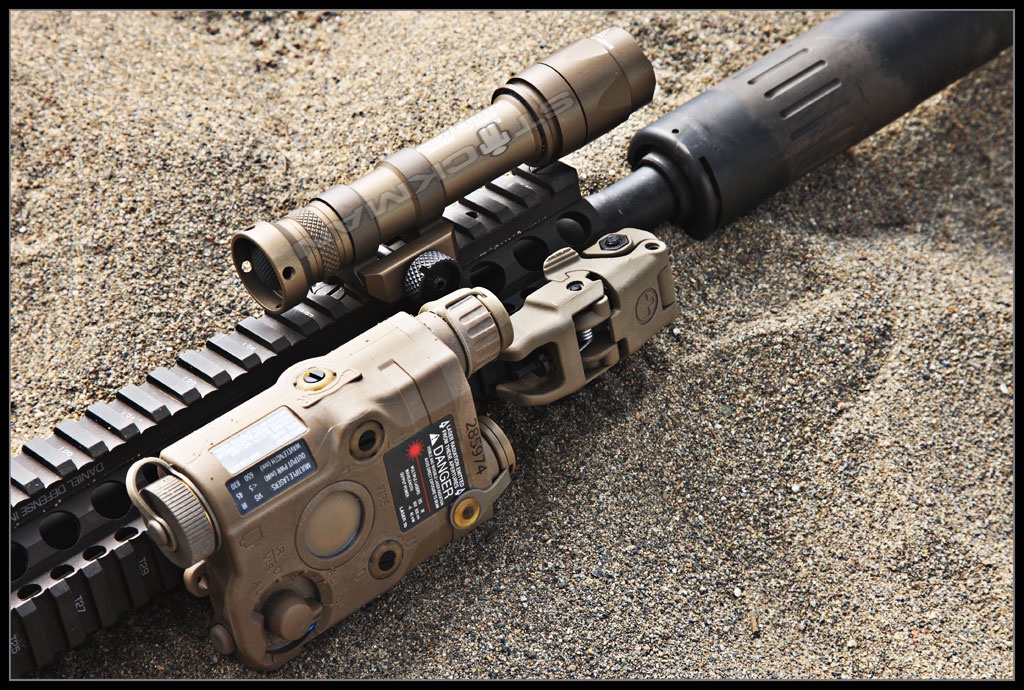 Get a sling. Beyond that, it depends what you'll be using the rifle for. Common accessories may include a bipod, flashlight, or a silencer, but there are many other options.